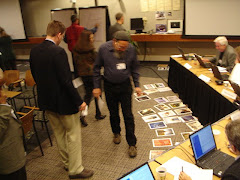
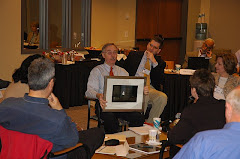
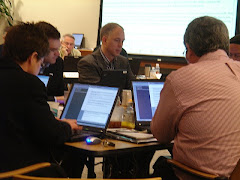
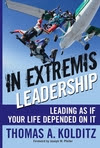
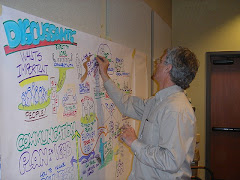
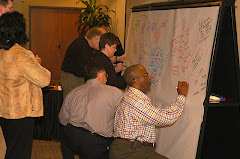
The Stepping into the Void report can be accessed here:
https://dokumen.tips/documents/stepping-into-void.html
Monday, March 18, 2024
Stepping into the Void


Monday, June 24, 2013
How Disasters Can Move Us to a Sense of Community
 I haven't posted to this blog in years but was inspired to do so by the fresh insights in an interview with Rebecca Solnit's about her book, A Paradise Built in Hell.
Rebecca observes that disasters can be a force for positive transformation and sometimes bring out the best in us:
"Behind such disaster response is an assumption about human nature: that we are selfish, chaotic, greedy, brutal animals. The evidence is mostly to the contrary - the great majority of us behave with grace and generosity and, often, great courage and calm."
Read more at:
http://www.dailygood.org/story/463/rebecca-solnit-on-how-disasters-can-move-us-from-a-sense-of-self-interest-to-a-sense-of-community-mark-karlin/
Tuesday, January 26, 2010
The bright spot in the terrible disaster in Haiti

The devastating earthquake in Haiti has produced a remarkable global response. The response, while no means adequate to the immense need, is still astounding in the vast outpouring of support -- manifest in rescue crews from far corners of the globe, the fundraising telethons by famous pop stars, the collection drives by ordinary people everywhere, and the sharing of food scraps among neighbors in Haiti.
This noble effort, while marred by missteps and confusion, shows that our global community can come together in collective action. A true test will be whether we can sustain this effort (I wrote about this on the CCL's Leading Effectively blog), applying our collective efforts in extended cooperative action. If we can accomplish this, what the terrible disaster in Haiti will give the world is a new global compact for bringing our immense, shared capabilities to bear in cooperative action wherever great human need is manifest.
Wednesday, January 6, 2010
We are the ones we have been waiting for
 One of the messages that popped into my mailbox after the New Year was an evocative and poetic statement attributed to the Hopi Elders. It speaks to the essence of crisis leadership. Good guidance for us all in these times:
You have been telling the people that this is the Eleventh Hour.
Now you must go back and tell the people that this is The Hour.
Here are the things that must be considered:
Where are you living?
What are you doing?
What are your relationships?
Are you in right relation?
Where is your water?
Know our garden.
It is time to speak your Truth.
Create your community.
Be good to each other.
And do not look outside yourself for the leader.
This could be a good time!
There is a river flowing now very fast.
It is so great and swift that there are those who will be afraid.
They will try to hold on to the shore.
They will feel like they are being torn apart, and they will suffer greatly.
Know the river has its destination.
The elders say we must let go of the shore, push off toward the middle of the river,
Keep our eyes open, and our heads above the water.
See who is there with you and celebrate.
At this time in history, we are to take nothing personally, least of all Ourselves!
For the moment we do, our spiritual growth and journey comes to a halt.
The time of the lonely wolf is over.
Gather yourselves!
Banish the word struggle from your attitude and vocabulary.
All that we do now must be done in a sacred manner and in celebration.
We are the ones we have been waiting for.
The Elders,
Oraibi, Arizona
Hopi Nation 2009
Boundary-Spanning Leadership Needed for the Global Crises of our Age
 It's been a tough year. TIME Magazine's list of the top news stories of 2009 is dominated by crises of all kinds: economic, political, security, and health.
What these crises have in common is that they spill across national borders and are well beyond the control of any single entity, no matter how large or powerful. How do we cope?
As we found in the Crisis Leadership Forum, there is need to create adaptable leaders at all levels who can better deal with uncertainty as well as build relationships across boundaries. CCL's Chris Ernst writes in Forbes that boundary-spanning leaders have a unique orientation:
"Rather than assuming boundaries to be barriers, truly collaborative leaders work best where boundaries intersect, overlap and bump up against one another. Boundary-spanning leaders bridge organizational and cultural divides; vertical and horizontal gaps; and stakeholder, demographic and geographic groupings. They thrive at finding innovative outcomes at the intersections where groups can work productively together."
Chris goes on to describe six leadership roles that are geared towards working across boundaries -- Conductor, Ambassador, Connector, Narrator, Mediator and Inventor. All of these are important in crisis preparedness and response. The more we can do to develop these capabilities in our ranks, and among leaders at large, the better we will be able to rise to meet the great challenges that are undoubtedly ahead in 2010.
Tuesday, December 1, 2009
Kanter on Making Promises
 Rossbeth Moss Kanter offers some sage advice on making promises. Crisis situations often make promises hard to keep. Kanter writes:
"Overly rosy promises are regularly offered by politicians, manufacturers, car salespeople, real estate agents, and nearly anyone trying to influence anyone else. Promises are the stuff of courtship or reassurance, particularly when people would rather deny the downside... This human tendency is exacerbated by systemic complexity. Economists know that forecasting is a dangerous occupation, especially about the future — which is funny but not a joke. In complex systems, inherent uncertainty joins with volatility to increase the likelihood that forecasts fall short."
She suggests:
"But lest we turn into a nation of cynics, promises should be kept realistic from the start. Leaders should be courageous about revealing that they don't control everything and don't know exactly how the future will unfold. The one promise they can reliably keep is to communicate often, with alternative scenarios in mind. In general, under-promising and over-delivering produces much more delight than over-promising and under-delivering. We are so braced for disappointment that a happy surprise stands out."
Monday, November 9, 2009
Bill George on Crisis Leadership
 Bill George writes in Harvard Business School's Working Knowledge on crisis leadership and the opportunity it provides to develop one's leadership skills:
"Leaders are neither made nor born. Like great musicians and athletes, they are born with certain gifts that give them the potential to lead, but they have to develop their gifts in order to become effective leaders. There is no better way to do so than leading others through a crisis."
Bill writes about the value of humilty in recognizing the limitations of what a leader can know and can do in a crisis:
"One of the great myths of leadership in recent years is that leaders have to appear strong and invulnerable to mistakes and pressures. All of us without exception make mistakes and will capitulate under enough pressure. The key is being open with others, taking them into your confidence, admitting your mistakes, and looking to them for advice and support. Rarely does anyone turn down a leader who genuinely asks for help.
Yet we're exposed regularly by the media to the stereotype of the flawless leader who always has an answer and is never left questioning a decision. While most leaders know this is a fantasy, they still struggle with admitting their own vulnerability when a situation goes awry and crisis strikes. It's as if doing so is tantamount to admitting failure as a leader.
This tension is not necessarily surprising. Fortune 500 CEOs are some of the most driven, results-oriented people on the planet. Because their jobs compel them to demand a great deal from their employees, their companies, and their products, most demand the same from themselves. In so doing, they are at risk of letting their egos take over and letting their protective shells harden. When things go wrong—which they inevitably do—they assume the fault lies elsewhere. Yet in most cases the leaders bear a high degree of responsibility for the problems, often as a result of the direct or indirect pressures they put on their people.
Authentic leaders find ways to resolve this struggle. Expressing humility is a great skill because it not only brings leaders closer to their management teams and employees, but also encourages similar candidness and humility in others. By taking the first step in revealing their vulnerabilities, leaders encourage an atmosphere where concerns and doubts are voiced. Potentially unforeseen problems can be addressed sooner, and with a team focus. It's difficult to do, but expressing vulnerabilities appropriately will make leaders more effective."
Bill suggests that leaders in a crisis don't need to carry the load alone nor be perfect. As we found in the Crisis Leadership Forum, a leader can be be more effective when they serve as a conductor of collective capabilities and wisdom.
Furthermore, Bill's perspective on crisis situations as a way to hone leadership skills makes sense. As we've found, the kind of skills needed for dealing with a crisis are increasingly in demand in a world that is in constant flux.
Saturday, October 3, 2009
Crisis Leadership Advice from GE's Immelt
 I recently ran across this piece from GE's CEO on leading in tough times. Immelt speaks to the personal aspects of leadership . Leadership, he says, is "an intense journey into yourself. It's about how much you want to learn. It's about how much you want to give. It's about personal change and just being ready to renew yourself every day."
Immelt offers crisis leaders this advice:
- Be decisive: Make decisions, including some occasions when you don't have perfect information.
- Be accountable: Stand by your decisions, admit when you've made a mistake, and make sure you and your team are accountable.
- Be transparent: Don't just tell the truth, share the intent behind your decisions.
- Be a unifier: Make people feel like they're part of something that will last.
- Be willing to change yourself: Embrace personal growth.
Tuesday, September 29, 2009
Noer's 10 Myths About Downsizing
 David Noer has a new edition of Healing the Wounds, his classic work on dealing with downsizing. David offers these tips, reprinted here from his Web site (http://davidnoer.com/):
1. Myth: There is a direct relationship between reducing “people costs” and organizational productivity. A layoff on a Friday will result in productivity gains on the following Monday.
Reality: People are not “things” to be added or deleted to the production equation with mathematical sterility. Humans are—just that, humans—and are carriers of feelings and emotions. The overwhelming consensus of downsizing research is that layoffs do not achieve their “going in” productivity goals. Survivors of most organizations are angry, depressed, anxious and fearful. They are not able or willing to take risks or focus on increasing customer service. At the very time organizations need them to be the most creative and energetic; they hunker down in the trenches, absorbed in their own toxic survivor symptoms. They may look as though they are working hard, but it is an illusion.
Reality: People are not “things” to be added or deleted to the production equation with mathematical sterility. Humans are—just that, humans—and are carriers of feelings and emotions. The overwhelming consensus of downsizing research is that layoffs do not achieve their “going in” productivity goals. Survivors of most organizations are angry, depressed, anxious and fearful. They are not able or willing to take risks or focus on increasing customer service. At the very time organizations need them to be the most creative and energetic; they hunker down in the trenches, absorbed in their own toxic survivor symptoms. They may look as though they are working hard, but it is an illusion.
2. Myth: Survivors – people who remain in organizational systems after downsizing – will work hard because they will be grateful that they were lucky enough to keep their jobs.
Reality: Survivor guilt - formulated by the same dynamics that affect survivors of other forms of trauma – is alive and well in post-layoff organizations. Guilt and its relatives – anxiety and depression – are not the stuff of motivation! Organizational leaders need to implement strategies to deal with the disabling consequences of survivor guilt before they will have truly motivated employees.
Reality: Survivor guilt - formulated by the same dynamics that affect survivors of other forms of trauma – is alive and well in post-layoff organizations. Guilt and its relatives – anxiety and depression – are not the stuff of motivation! Organizational leaders need to implement strategies to deal with the disabling consequences of survivor guilt before they will have truly motivated employees.
3. Myth: Organizational leaders should not tolerate any whining and bitching concerning the downsizing process.
Reality: Organizationally sanctioned processes that facilitate the venting of repressed feelings and emotions are a necessary means to the end of moving employees back to productivity. Without the healthy externalization of layoff induced anger, fear, and anxiety, employees will remain crippled by layoff survivor sickness. In fact, research shows their symptoms will get worse.
Reality: Organizationally sanctioned processes that facilitate the venting of repressed feelings and emotions are a necessary means to the end of moving employees back to productivity. Without the healthy externalization of layoff induced anger, fear, and anxiety, employees will remain crippled by layoff survivor sickness. In fact, research shows their symptoms will get worse.
4. Myth: During downsizing, managerial communication needs to be clear, planned, objective, and structured. Expressing uncertainly, ambiguity, or dealing in feelings and emotions is not useful.
Reality: Feelings and emotions are the currency of the managerial realm. Surviving employees are attempting to deal with a toxic brew of productivity hindering emotions and need to feel authorized to talk about them. Employees would much rather have managers tell them that they don’t know something as opposed to having them not say anything or make something up. Managers who are strong enough to show their own vulnerability and uncertainty not only help their employees, they help themselves.
Reality: Feelings and emotions are the currency of the managerial realm. Surviving employees are attempting to deal with a toxic brew of productivity hindering emotions and need to feel authorized to talk about them. Employees would much rather have managers tell them that they don’t know something as opposed to having them not say anything or make something up. Managers who are strong enough to show their own vulnerability and uncertainty not only help their employees, they help themselves.
5. Myth: Time heals all wounds. Layoff survivor symptoms may flare up initially, but quickly disappear a few weeks after the reductions take place.
Reality: Without planned interventions, layoff survivor symptoms not only linger, they intensify. Research conducted in one organization five years after the initial layoff showed survivor symptoms not only intensified, but many employees were demonstrating passive-aggressive behavior – faking it and “going through the motions” in some contexts, and expressing increased anger and hostility in many others. A large number of organizational systems today – public, private, government – are only operating at a small fraction of their potential because they are dragged down by employees with long term survivor symptoms.
Reality: Without planned interventions, layoff survivor symptoms not only linger, they intensify. Research conducted in one organization five years after the initial layoff showed survivor symptoms not only intensified, but many employees were demonstrating passive-aggressive behavior – faking it and “going through the motions” in some contexts, and expressing increased anger and hostility in many others. A large number of organizational systems today – public, private, government – are only operating at a small fraction of their potential because they are dragged down by employees with long term survivor symptoms.
6. Myth: In tough times, the most effective managers “suck it up,” are tough minded, brutally honest, and don’t tolerate “touchy-feely” distractions.
Reality: “Sucking it up” is precisely the wrong strategy for dealing with downsizing, change, and transition. It is a defense mechanism - a form of evasion that anchors behavior in the past and prevents productive engagement and personal growth. Leadership in the post-layoff environment is a helping, not a controlling relationship, and requires reaching out, not closing down and hiding behind a facade of toughness and control. Honesty grounded in a helping orientation is an absolute necessity. Honesty grounded in “brutality” may help the manager vent his or her own anger, but it will ultimately harm the manager, the employee, and the organization. Labeling authenticity, empathy, and helping behaviors with the derogatory term “touchy-feely,” or making disparaging comments that one lives in the “real” world, are additional examples of diversionary defense mechanisms. The most effective managers have learned the power of engaging in helping relationships and use that power to re-recruit employees and restore organizational productivity.
Reality: “Sucking it up” is precisely the wrong strategy for dealing with downsizing, change, and transition. It is a defense mechanism - a form of evasion that anchors behavior in the past and prevents productive engagement and personal growth. Leadership in the post-layoff environment is a helping, not a controlling relationship, and requires reaching out, not closing down and hiding behind a facade of toughness and control. Honesty grounded in a helping orientation is an absolute necessity. Honesty grounded in “brutality” may help the manager vent his or her own anger, but it will ultimately harm the manager, the employee, and the organization. Labeling authenticity, empathy, and helping behaviors with the derogatory term “touchy-feely,” or making disparaging comments that one lives in the “real” world, are additional examples of diversionary defense mechanisms. The most effective managers have learned the power of engaging in helping relationships and use that power to re-recruit employees and restore organizational productivity.
7. Myth: Once things get back to normal, the epidemic of downsizings will stop and job security will return.
Reality: We are experiencing a fundamental shift in the psychological contract that connects employee to employer. When the economy becomes more positive, the frequency of mass layoffs will diminish, but long-term, lifetime employment with one organization is a thing of the past. Employees will have to rely on maintaining transferable marketable skills and continually cultivate their professional network. That will provide the only true employment security in the brave new world of the new psychological employment contract.
Reality: We are experiencing a fundamental shift in the psychological contract that connects employee to employer. When the economy becomes more positive, the frequency of mass layoffs will diminish, but long-term, lifetime employment with one organization is a thing of the past. Employees will have to rely on maintaining transferable marketable skills and continually cultivate their professional network. That will provide the only true employment security in the brave new world of the new psychological employment contract.
8. Myth: Downsizing erodes loyalty, motivation, and commitment.
Reality: In the new reality, employees will be loyal to their profession and motivated more by the work itself rather than the organization where they perform that work. We are caught in the confusing and painful cross currents of a paradigm shift. Once employees break their organizational codependency – caused by indexing their self-esteem and relevance on the organization where they work as opposed to the work itself – there will be a quantum increase in motivation. This will occur because employees will be driven by an inner sense of purpose rather than contrived external motivational techniques.
Reality: In the new reality, employees will be loyal to their profession and motivated more by the work itself rather than the organization where they perform that work. We are caught in the confusing and painful cross currents of a paradigm shift. Once employees break their organizational codependency – caused by indexing their self-esteem and relevance on the organization where they work as opposed to the work itself – there will be a quantum increase in motivation. This will occur because employees will be driven by an inner sense of purpose rather than contrived external motivational techniques.
9. Myth: Despite the current epidemic of downsizing, organizations need to find ways to tie in employees over the long term.
Reality: The best strategy for organizational survival in the new reality is to attract employees because of the work. In the new paradigm the best and most talented employees will have options; they will choose their employers because they want to be there, not because they have to be there. Leading these new, “volunteer” employees will require much more creativity and collaboration than managing a work force that is “tied in” and trapped by benefits, services, and social systems that reward fitting in and conformity and motivate by fear of job loss.
Reality: The best strategy for organizational survival in the new reality is to attract employees because of the work. In the new paradigm the best and most talented employees will have options; they will choose their employers because they want to be there, not because they have to be there. Leading these new, “volunteer” employees will require much more creativity and collaboration than managing a work force that is “tied in” and trapped by benefits, services, and social systems that reward fitting in and conformity and motivate by fear of job loss.
10. Myth: Employees who keep their jobs – survivors – are better off than those who must leave - victims.
Reality: Both those who stay and those who leave are, in a sense, “victims” of the paradigm shift to the new psychological employment contract. Despite, often significant, economic issues, some who leave are able to re-frame their job loss, move away from victimhood, and discover a wake-up call. They use the experience to find work that has more personal relevance and remove their self-esteem from the unpredictable vicissitudes of organizational life. Survivors, too have the opportunity to turn away from victimhood. They can shed the symptoms of layoff survivor sickness, and take personal charge of their lives and careers. It is a difficult struggle for both those who stay and those who leave, but the gain is well worth the pain.
Reality: Both those who stay and those who leave are, in a sense, “victims” of the paradigm shift to the new psychological employment contract. Despite, often significant, economic issues, some who leave are able to re-frame their job loss, move away from victimhood, and discover a wake-up call. They use the experience to find work that has more personal relevance and remove their self-esteem from the unpredictable vicissitudes of organizational life. Survivors, too have the opportunity to turn away from victimhood. They can shed the symptoms of layoff survivor sickness, and take personal charge of their lives and careers. It is a difficult struggle for both those who stay and those who leave, but the gain is well worth the pain.
Sunday, August 2, 2009
Surviving “The Next Catastrophe” by Reducing Vulnerabilities
 If the renowned organizational sociologist Charles Perrow had a classic-rock theme song, it just might be “You Ain’t Seen Nothin’ Yet,” the 1974 hit song by Bachman Turner Overdrive. Let me explain.
In his classic book, Normal Accidents: Living with High-Risk Technologies, Perrow discussed the numerous high-risk technologies that pervade modern life and the dangers they pose for society. First published in 1984 with an updated version released in 1999, Normal Accidents presents an argument for the inevitability of large-scale disasters such as nuclear meltdowns, petrochemical-plant explosions, maritime accidents, and so forth. These accidents are inevitable, or “normal,” because they stem from systems that have specific structural characteristics. Namely, these systems are interactively complex, meaning that different parts of the system are likely to work together in ways that produce unanticipated consequences. Secondly, these systems exhibit tight coupling, meaning that a single change in one part of the system will directly lead to changes in other parts of the system.
This means that over time disasters will become increasingly likely. In other words, you ain’t seen nothin’ yet.
In his 2007 book The Next Catastrophe: Reducing our Vulnerabilities to Natural, Industrial, and Terrorist Disasters, Perrow builds upon the themes presented in Normal Accidents while suggesting a few approaches toward limiting the havoc that such normal accidents will inevitably wreak upon society. In so doing, he also points out three more sources of vulnerability beyond interactive complexity and tight coupling. These three sources are all in the form of high concentrations of the following:
- Energy. In numerous locations around the United States, industrial storage facilities house vast quantities of explosive, toxic, and flammable substances. Because these storage facilities are concentrated in specific locations, an accident in any one of them would be much more disastrous than if storage occurred in smaller quantities at a greater number of separate sites.
- People. High population densities in risky areas make disasters in those locales catastrophic. For example, New Orleans is a vulnerable city—due to its geography and its proximity to high-risk industry. The fact that it is also high in population density makes it particularly vulnerable.
- Economic and political power. Perrow has a knack for drawing our attention to the role of power in organizations, and he argues here that mega-corporations and the political entities with which they interact wield so much power over very real aspects of our daily lives that any failure within them could pose serious risk. One example he cites is the pervasive nature of the Microsoft Windows operating system. If Windows failed—due to a massive computer virus, for example—catastrophic damage to business, government, and personal livelihood would likely result. Another example, although not addressed directly in the book, is the danger posed by financial institutions deemed “too big to fail” that we have witnessed in recent years.
To address these issues, Perrow argues that (a) government should implement wise regulations that limit these concentrations and (b) that leaders should focus on these concentrations as real threats instead of being distracted by other less-likely sources of disaster. In essence, he suggests that the focus should be on “shrinking the targets.” For example, Perrow argues that political interests have overestimated the terrorism threat in the United States while underestimating the threats posed by industrial forces, such as the nuclear power industry.
Overall, Perrow presents a number of examples that suggest the three areas of concentration listed above are indeed sources of vulnerability. His approach toward shrinking those targets, however, appears to focus mostly on policy decisions rather than aspects of human behavior within organizations.
As such, The Next Catastrophe provides an interesting view of disaster and vulnerability at a macro level. Much like “watchdog” groups that illuminate concerns within government agencies and programs, Perrow has been shining a light on the dark side of organizations, business, and government for decades. And his suggestions, when coupled with other viewpoints at the micro level, may provide a way for us to avoid the ominous theme of “you ain’t seen nothin’ yet” that underscores his theories.
The article also appears at Foster Excellence.
Monday, July 20, 2009
Looking Back at the Sichuan Earthquake Through the Lens of Katrina
***
When the earthquake hit, I was on the second story of a China Construction Bank with my friend. We had just handed over our passports and bank cards to the teller when the building lurched beneath us. We joined a mass of fleeing clients and tellers running through a hall, down a free-standing spiral staircase, through the lobby and out the doors. Then we looked around and saw there was nowhere else to run. Skyscrapers surrounded us in the 10 million person city; we simply clung to one another. The trembling and shaking dragged on relentlessly. We watched the buildings, trying to eyeball directions and trajectories of potential collapse. They heaved and cracked, but most withstood the worst of that 3 minute earthquake. In the days and weeks that followed, aftershocks punctuated our circadian rhythms and rumors ran rampant, spurring pandemic scares, and fears of chemical explosions and spoiled water supplies. We were terrified – but we were alive.
The rural villages closer to the epicenter were not so lucky. Where we faced rumor and conjecture, they saw reality in broken bodies and homes. 90,000 people died and another 6 million were displaced. The areas that were hardest hit – where entire towns were wiped away in an instant - were often the most remote, with access limited both physically and politically. In light of this, the relief efforts that ensued and the leadership they inspired were rendered all the more incredible.
Reading recent posts on this crisis blog, I was struck by the way that post-Katrina lessons resonated with experiences we had in Sichuan following the earthquake. I've included a few of these key points and reactions below.
"Empower people at the grassroots: Organizations should empower local leaders to make decisions based on the situations they face and then support those decisions."
When the chance emerged to launch an earthquake relief project, our organization gave us the power to run with it. We had spent over a year and a half researching and developing a microfinance program 50 km outside the city. A week had gone by after the earthquake, and there was still no sign of us being able to reach the village. Within reach, however, were dozens of cities devastated by the earthquake that could benefit from potential help.
When we approached our organizational leadership half a world away about needing to develop a refugee children's relief effort, they didn't blink. Within a week we had developed and launched the beginnings of a children's summer camp relief program. This would eventually grow into a weekly activity base and English-learning program for kids in Luo Shuai, a town where 1/3 of the children had perished during the 3 minutes of the Sichuan earthquake.
"Encourage courage: Lead your organization in a way such that people aren't afraid to "bet their bars" and take personal risks."
We started with one mini-van full of volunteers, soccer balls, paint brushes, and sweat. The following weekend we had two vans, and three the next. By the fourth we needed to hire a local school bus and by the fifth we had reached capacity. It took 4 hours to reach the village that first day and another 4 to get home. The roads were cracked, collapsed, and filled with debris. Police officers at blockades lined the roads leading to the refugee camps. Cameras were banned. Passports required.
We played all day in the sweltering summer sun with the children of Luo Shuai. The kids we met and played with were homeless, grief-stricken, and confused on many levels. Two of their schools had collapsed when the earthquake hit mid-school day. Local estimates suggested that up to a third of the children in the village had died in the rubble. Their town no longer existed as they remembered it.
On the days that we played with them, however, they were just normal kids. The summer days were hot, school was suspended, and the refugee camps were boring. A gaggle of paint-brush wielding foreigners was a welcome diversion.
A parent told us that watching the children play with us he saw them laugh and smile for the first time since the earthquake. "You don't understand," he said, "the rest of the week the kids just sit and stare. They are never this happy." On some weeks we saw parents standing off to the side of the playgroup and looking silently on. Some would cry. They had lost their children.
"Develop flexibility: Develop a culture of flexibility, adaptation, and discretion while staying action oriented."
During these moments of playtime with Chinese refugee children, leaders emerged amongst the expat community and Chinese friends leading the volunteer movement. Some took on new roles entirely, while others experimented with variations of familiar roles. A retired schoolteacher who loved pristine order gave herself up to the hot lovable mess of the toddlers who would fling themselves onto her lap and never, ever, pronounce the alphabet correctly.
A young British-Australian couple began to learn about one-another's abilities with children as they orchestrated musical games together. When the stereo broke down one day during "dance class," I - the resident Coloradoan of the bunch - brought line dance to Sichuan Province.
The rural villages closer to the epicenter were not so lucky. Where we faced rumor and conjecture, they saw reality in broken bodies and homes. 90,000 people died and another 6 million were displaced. The areas that were hardest hit – where entire towns were wiped away in an instant - were often the most remote, with access limited both physically and politically. In light of this, the relief efforts that ensued and the leadership they inspired were rendered all the more incredible.
Reading recent posts on this crisis blog, I was struck by the way that post-Katrina lessons resonated with experiences we had in Sichuan following the earthquake. I've included a few of these key points and reactions below.
"Empower people at the grassroots: Organizations should empower local leaders to make decisions based on the situations they face and then support those decisions."
When the chance emerged to launch an earthquake relief project, our organization gave us the power to run with it. We had spent over a year and a half researching and developing a microfinance program 50 km outside the city. A week had gone by after the earthquake, and there was still no sign of us being able to reach the village. Within reach, however, were dozens of cities devastated by the earthquake that could benefit from potential help.
When we approached our organizational leadership half a world away about needing to develop a refugee children's relief effort, they didn't blink. Within a week we had developed and launched the beginnings of a children's summer camp relief program. This would eventually grow into a weekly activity base and English-learning program for kids in Luo Shuai, a town where 1/3 of the children had perished during the 3 minutes of the Sichuan earthquake.
"Encourage courage: Lead your organization in a way such that people aren't afraid to "bet their bars" and take personal risks."
We started with one mini-van full of volunteers, soccer balls, paint brushes, and sweat. The following weekend we had two vans, and three the next. By the fourth we needed to hire a local school bus and by the fifth we had reached capacity. It took 4 hours to reach the village that first day and another 4 to get home. The roads were cracked, collapsed, and filled with debris. Police officers at blockades lined the roads leading to the refugee camps. Cameras were banned. Passports required.
We played all day in the sweltering summer sun with the children of Luo Shuai. The kids we met and played with were homeless, grief-stricken, and confused on many levels. Two of their schools had collapsed when the earthquake hit mid-school day. Local estimates suggested that up to a third of the children in the village had died in the rubble. Their town no longer existed as they remembered it.
On the days that we played with them, however, they were just normal kids. The summer days were hot, school was suspended, and the refugee camps were boring. A gaggle of paint-brush wielding foreigners was a welcome diversion.
A parent told us that watching the children play with us he saw them laugh and smile for the first time since the earthquake. "You don't understand," he said, "the rest of the week the kids just sit and stare. They are never this happy." On some weeks we saw parents standing off to the side of the playgroup and looking silently on. Some would cry. They had lost their children.
"Develop flexibility: Develop a culture of flexibility, adaptation, and discretion while staying action oriented."
During these moments of playtime with Chinese refugee children, leaders emerged amongst the expat community and Chinese friends leading the volunteer movement. Some took on new roles entirely, while others experimented with variations of familiar roles. A retired schoolteacher who loved pristine order gave herself up to the hot lovable mess of the toddlers who would fling themselves onto her lap and never, ever, pronounce the alphabet correctly.
A young British-Australian couple began to learn about one-another's abilities with children as they orchestrated musical games together. When the stereo broke down one day during "dance class," I - the resident Coloradoan of the bunch - brought line dance to Sichuan Province.
I saw the most striking example of a new take on an old role in the Scottish manager of an alcohol production company. This man was used to wielding his command of the English language in a strong brogue as his most powerful tool. However, he spoke little Mandarin and ran out of things to say to the children quickly. He chose to spend his time with the project volunteering quietly off to one side, camera in hand. While those of us that knew a bit more Mandarin chatted and played, this alpha male began quietly taking portraits of children at play and their families who watched them. The elders took a shining to him, noting that he possessed gray hair – like theirs – and an unending supply of images of their grandchildren in his camera. He was a hit with the 60 + set.
A few weeks into the project, he told us sharply that he had asked his alcohol company to have posters ordered and printed through "a connection with a bloke he knew." He showed up the following week with three tubes stuffed with industrial-quality posters as tall as himself. In place of the usual liquor ads that he might have normally printed were hundreds and hundreds of photos of our kids and their families. While we played that week, he went to the spots around the refugee camp where families could gather and quietly hung these life-size memories. For the rest of our remaining weeks, whenever we came or went from the camp, we could see community members – especially those elders - gathered around the photo collages and discussing whose grandchild looked handsome, whose daughter that was, and who got it in his mind to have his face painted into a butterfly pattern by the foreigners.
*************
Reading this blog, I know that the obstacles we faced following the Sichuan earthquake are common to tragedies worldwide. However, I am also heartened to see that in times of crisis we also share humane strengths. Across the board, it is the personal and organizational moments of empowerment, creativity, and courage that shape relief work and strengthen communities. Creative organizational leadership can make for fertile soil so that out of disaster we grow beauty and strength that we could have never imagined we possessed.
Friday, July 10, 2009
Managing Self in a Crisis
 In an insightful blog post, Brian Bacon, CEO of Oxford Leadership Academy, writes of how our self-image shapes how we react in a crisis:
People with an outside-in obsession also have their sense of security linked to situations outside of themselves; hence they often look and feel out of control. This is disastrous for a leader. During times of crisis, the external environment is chaotic and uncontrollable… a person may lose his job, or feel unable to do a good job, or be thrust into a position beyond his ability to succeed. He may feel inadequate to the task. So, if one’s self-image and sense of security is linked to the external environment he will be in turmoil internally to an even greater extent. Why? Because fear is an illuminator and exaggerator of truth.
Intense fear of failure is an inevitable condition of those whose self-image is based on this outside-in illusion. How will I look? What will people think? Can I make it work? Are the conditions right for me to succeed? What if I fail? What is plan B? These are not the right questions for a leader.
The leader who outperforms during times of crisis is the one whose strength and conviction is generated from the inside-out, not the outside-in. The one who will not be swayed by flattery, fear or force, that’s the fellow we will follow, in spite of his flaws.
.
A few good questions to help define your purpose and what generates meaning: What story do I presently tell myself and others about who I am? What drives me? What motivates me to keep going? What is my passion? What are my most valuable assets? What is most valuable to me in life? What can I rely on, even if everything else is taken away? How can I change my story to be more aligned with what I know is true?
Brian Bacon concludes:
The economic crisis is here. You don’t have a choice in it happening or not, but you can choose the attitude you adopt towards it. This year will inevitably mark the beginning of a new chapter. There are outside factors, of course, but whether it will be the best chapter ever, or perhaps the worst, will, to a great extent, depend upon the attitude you choose.
Saturday, June 20, 2009
Crisis and Twitter: The Social Media Revolution Fuels a Citizen Revolution in Iran
 One of the key challenges in crisis situations is the transfer of information. The Crisis Leadership Forum pointed out the importance of building relationships before a crisis. Social networking media such as Twitter and Facebook have created a web of relationships through which communication can flow globally from person to person in a matter of minutes. The post-election crisis in Iran demonstrates the power of these media that are instantaneous, unfiltered, viral, local, and global. For the Iranian government, it is far easier to restrict access by formal news media representatives than thousand of ordinary citizens now broadcasting (and rebroadcasting) news and views to the world via Twitter, SMS, and Facebook.
TIME magazine writes about the prominent role Twitter is playing:
"Twitter [is] practically ideal for a mass protest movement, both very easy for the average citizen to use and very hard for any central authority to control. The same might be true of e-mail and Facebook, but those media aren't public. They don't broadcast, as Twitter does. On June 13, when protests started to escalate, and the Iranian government moved to suppress dissent both on- and off-line, the Twitterverse exploded with tweets from people who weren't having it, both in English and in Farsi. While the front pages of Iranian newspapers were full of blank space where censors had whited-out news stories, Twitter was delivering information from street level, in real time:
Woman says ppl knocking on her door 2 AM saying they were intelligence agents, took her daughter
Ashora platoons now moving from valiasr toward National Tv staion. mousavi's supporters are already there. my father is out there!
we hear 1dead in shiraz, livefire used in other cities RT
As is so often the case in the media world, Twitter's strengths are also its weaknesses. The vast body of information about current events in Iran that circulates on Twitter is chaotic, subjective and totally unverifiable. It's impossible to authenticate sources."
During Hurricane Katrina, the formal news media itself circulated some horrific stories about events in the Superdome in that were later found to be untrue. With the media restricted in Iran, bottom-up, peer-to-peer networks have become the prime source of information. This factor adds additional complexity and volatility to crisis situations.
.
For more perspective on Twitter and the protests in Iran, read:
Monday, May 18, 2009
Looking Beyond Government for Help
"AMERICA seems to have dodged a bullet with the swine flu epidemic" writes Stephen T. Ganyard, a former deputy assistant secretary of state, in an op-ed in The New York Times titled All Disasters Are Local. He notes that a big challenge is coordination:
"In responding to crises, the most persistent problem is that of collaboration — people with information and equipment who are unable to share it with those who need it most. The means to effective collaboration is social networking and exploiting the natural mutual attractions of communities with common interests."
An approach to enhance coordination that Ganyard established is an open and voluntary annual disaster simulation in Los Angeles titled Golden Phoenix that builds relationships and trust:
"The degree of personal trust at the tactical level, not money or machines, is the single most important determinant of how well communities will deal with threats and disasters. But these relationships must be established in training so that first responders are not handing out business cards to one another on the way to the disaster."
In the end, says Ganyard, Americans must look beyond government for help:
"Most of the critical infrastructure of the country is in private hands, and much of humanitarian relief is provided by local churches and relief charities. We need "whole of society" not just "whole of government" responses."
Ganyard's perspective on building community relationships and capacity echoes what was learned at the Crisis Leadership Forum, where nearly two dozen leaders came together to share lessons from hurricane Katrina:
- Forge relationships: Build relationships with a broad base of stakeholders before the crisis.
- Develop flexibility: Develop a culture of flexibility, adaptation, and discretion while staying action oriented.
- Encourage courage: Lead your organization in a way such that people aren't afraid to “bet their bars” and take personal risks.
- Empower people at the grassroots: Organizations should empower local leaders to make decisions based on the situations they face and then support those decisions.
- Engender inclusive leadership: Develop the capacity in individuals, groups, and communities to participate as peers in creating leadership.
Sunday, May 17, 2009
Maintaining Competitive Advantage Requires High-Reliability Organizing
 A healthy dose of paranoia and an obsession with failure: That’s not typical leadership advice. But that’s part of what management guru Jim Collins discusses as a crucial ingredient for leaders hoping to maintain competitive advantage through crisis and adversity.
What he didn’t say, at least in the teaser to his new book
 featured in the May 25 issue of BusinessWeek, is how much we can learn about business resilience and leadership from “high-reliability organizations.”
High-reliability organizations (HROs) are those that face so much danger, complexity, and ambiguity on a daily basis that we’d expect them to fail very frequently—but they don’t. Typical examples of HROs include nuclear power plants, naval aircraft carriers, and emergency response agencies. For a variety of reasons, these organizations are able to continually cope with small errors and negotiate the ambiguity around them such that they avoid disaster.
- Preoccupation with failure
- Reluctance to simplify
- Sensitivity to operations
- Commitment to resilience
- Deference to expertise
 This notion of leadership differs from much of leadership thought—both in academic and managerial circles—that focuses on leaders as heroic men and women who gallop around organizations on white horses, dream about possibilities, and inspire followers to march along toward greatness. I’m exaggerating for illustrative purposes, of course, but my point is that we can learn from the tough, questioning, interactive model of leadership suggested by HROs.
- Rewarding those who highlight “grim facts"
- Leading by asking questions
- Crediting others for success
- Arguing and debating to help the organization overall
- Learning from past mistakes
Collins’ new book, How the Mighty Fall and Why Some Companies Never Give in, probably
 offers numerous other ways in which business organizations can become more resilient and ways in which leaders can effectively lead during crises. All I’m saying is that those principles have much in common with what we’ve already learned from HROs. Namely, Collins’ research strongly suggests that we can apply lessons learned in HROs—be they combat teams, nuclear power plants, or flight-deck operators—to the realm of business, providing distinct ways for leaders in organizations to avoid the disastrous consequences of failure.
The article also appears at Foster Excellence.
Thursday, April 30, 2009
Helpful Tool or Rumor Mill 2.0: The Role of Social Media in Crisis Communication
 It’s commonly assumed that when it comes to communication that more is better. But if we look closely at what that assumption means regarding how people behave within organizations and how leaders function during crises, it’s relatively easy to find evidence suggesting that more isn’t better. In fact, too much information can greatly exacerbate ambiguity within organizations and, during a crisis, incite panic among external stakeholders.
 Consider the current buzz surrounding the H1N1 influenza virus, the so-called “swine flu.” It’s getting a great deal of attention—as it should—from major news outlets around the world. For example, a Google News search of the keyword H1N1 at 1:10 p.m. EST on April 30 yielded 77,337 results within the last hour alone. Combine that coverage with millions of people sharing it and discussing it on social-media sites like Twitter and Facebook, and you have an incredible amount of information bouncing around cyberspace. Yet the question remains: During crises, are social media and Internet-based technologies helpful tools? Or do they make the problem worse by functioning like a high-tech rumor mill?
Certainly, arguments exist for both sides. The Internet and social media make information dissemination extraordinarily fast. Tech-savvy leaders during crises could potentially use sites like Twitter to provide stakeholders with useful updates that ensure wide dissemination of information.
 It’s also plausible that people may become overloaded with contradictory or erroneous information, and that specific pieces of information may unduly influence people’s perceptions. Additionally, the Internet and social media may encourage users to gauge a crisis’ severity incorrectly and take inappropriate action. For example, it’s a distinct possibility that people may hoard personal stashes of the influenza medication Tamiflu, greatly hindering public-health efforts.
So how should leaders use the Internet and social media during crises? Or should they even use these tools at all? The answers to those questions are complex, but perhaps leaders could start by recognizing the Internet and social media outlets for what they are—tools. And like any tool, they are only as good as the way in which they are used. Maybe leaders should start with understanding the important messages they need to communicate, the audiences that they need to reach, and then wisely employ the most appropriate technologies accordingly.
At the very least, it behooves leaders to understand what tools are available and strategize how best they might use them before crisis strikes—remembering, of course, that (a) more information isn’t always better and (b) anything disseminated via the Web has the propensity to spread like wildfire.
Saturday, April 11, 2009
Pirates, Hostages, and Ambiguity on the High Seas: Countering Complex Threats with Complex Solutions
 Despite what the office-supply store Staples says in its latest advertising campaign, most of the time there is no “easy button.” This is especially true in crises, which typically involve numerous actors, interdependent action, and high levels of ambiguity and uncertainty. Add to those complications malicious intent by certain actors within the crisis, and you’ve got a real problem. Such is the crisis currently in progress about 300 miles off the coast of Somalia, where a band of pirates are holding hostage Richard Phillips, captain of the U.S.-flagged cargo ship Maersk Alabama.
In the still-developing story, pirates attempted to take control of the cargo ship—an attempt that ran afoul when crewmembers resisted. Now, four pirates are holding the ship’s captain hostage in a lifeboat, spawning a confluence of numerous different actors from the United States bent on resolving the crisis. And the reason why so many different actors are getting involved has something to do with (a) the complexity of the event itself, and (b) something scholars have called “requisite variety.”
First, consider the complexity of dangerous pirates operating in international waters off the coast of the Horn of Africa, holding an American ship captain hostage, and communicating no clear paths toward resolution. National reputations, corporate interests, and general notions about international-shipping safety are at stake. Thus, a number of powerful parties—Maersk Line, (owners of the Maersk Alabama), U.S. President Barack Obama and his White House, the U.S. State Department, and others—have a vested interest in the event and its outcomes.
Second, an event of this level of complexity necessarily requires a complex response. This is  the notion of “requisite variety,” which essentially means that successfully dealing with multifaceted circumstances requires a similar amount of diversity within the response. There is simply so much ambiguity and so many interests involved that many different group representatives with different areas of expertise must interact and come to a collective solution. For example, the U.S. Navy’s response includes aerial surveillance and on-site monitoring by the guided missile destroyer USS Bainbridge. Furthermore, the FBI is now involved, and its hostage negotiators have been attempting to establish communications with the hostage takers via a satellite link aboard Bainbridge.
 the notion of “requisite variety,” which essentially means that successfully dealing with multifaceted circumstances requires a similar amount of diversity within the response. There is simply so much ambiguity and so many interests involved that many different group representatives with different areas of expertise must interact and come to a collective solution. For example, the U.S. Navy’s response includes aerial surveillance and on-site monitoring by the guided missile destroyer USS Bainbridge. Furthermore, the FBI is now involved, and its hostage negotiators have been attempting to establish communications with the hostage takers via a satellite link aboard Bainbridge.
 The collaboration between the Navy and the FBI is a good example of escalating requisite variety because Navy leaders recognized that the situation was more complex than their capabilities, and that they needed to collaborate with people who have more extensive hostage-negotiation expertise. For almost three years, I served as an officer aboard a ship identical to the USS Bainbridge. The ship itself is an extraordinary machine. It’s highly maneuverable, technologically advanced, and has a wide range of defensive, offensive, and surveillance capabilities. Its crew of about 300 comprises a highly diversified and well-trained cadre of subject-matter experts and naval-warfare generalists, so the Bainbridge and its crew are an example of a highly complex system designed to counter complex challenges.
But within this current crisis off the coast of Somalia, the decision by Navy leaders to reach out to the FBI for more expertise in the hostage-negotiation realm demonstrates a key competency of crisis leadership. Leaders must be able to recognize that when a situation requires more diversity in expertise, more requisite variety. And if they are successful in matching the complexity of the environment with a complex and well-coordinated response, positive outcomes become more likely.
So it’s an unfortunate fact that there’s no “easy button.” What leaders can do within crises, however, is pay close attention to their environments and ensure a finely grained division of labor among diverse experts in their response. They must counter complex threats with complex, collaborative solutions. It’s not easy, but it’s one key part of good crisis leadership.
Sunday, March 15, 2009
Core Values and Human Capital: Keys to Success in an Era of Turbulence
 Welcome to the “new normal.” That’s part of what management guru Jim Collins recently said in an interview with Fortune magazine senior writer Jennifer Reingold. And by the “new normal,” Collins, author of business classics “Built to Last” and “Good to Great,” suggested that the current volatility and instability in the marketplace is not an aberration. In fact, he opined that the stability we enjoyed from 1952 to 2000 was an anomaly. Simply put, economic turbulence is here to stay. So get used to it.
If that’s the case, though, what should business organizations do about it? To answer that question, Collins cited practices of some of the past century’s most-enduring companies, specifically, Procter & Gamble, General Electric, Johnson & Johnson, and IBM. For Collins, two particular aspects of those companies’ strategic approach have made them successful in the face of crisis.
- Strong core values: Because crises naturally challenge an organization’s capabilities, it’s crucial for managers to maintain a consistent focus on the organization’s central ideals. This entails continually reinforcing how you do business, in addition to what your business does. For example, Collins cited Procter & Gamble’s persistent focus on product quality as an enduring feature that has helped it succeed despite adversity.
- A continual focus on human capital: Quite simply, people matter. If managers choose to sacrifice attention to their human capital, their organizations will fail. Retaining—and yes, even hiring—good people during economic downturns should continue to be a top priority. Why? According to Collins, it’s high-performing employees that pull organizations toward success during crises. Additionally, in a labor market flush with talent, the time is ripe for organizations to bolster their human-capital advantage.
Finally, Collins proposed that executives should remember that “turbulence is your friend.” Despite current economic uncertainty, organizations with leaders who seek and exploit new opportunities will emerge from this crisis with a renewed strategic focus enabling them to succeed.
The worst action for executives, Collins contended, is inaction. Referencing his hobby of rock climbing, he said, “You don't just sit on the mountain. You either go up or go down, but don't just sit and wait to get clobbered. If you go down and survive, you can come back another day. You have to ask the question, ‘What can we do not just to survive but to turn this into a defining point in history?’” The place to start, as Collins suggested, just might be (a) reinforcing your core values and (b) focusing on your human capital. Because, after all, values and people do make a difference.
Saturday, March 7, 2009
Crisis Leadership Lessons from the "Miracle on the Hudson"
 Captain Chesley “Sully” Sullenberger, who brought his planeload of 150 passengers down safely in the Hudson river after losing both engines, has been celebrated for his performance and his character.
A blog post, How to Pilot Through a Financial Crisis Like Captain Chesley “Sully” Sullenberger, distills some of the characteristics Captain Sully displayed:
Stay Calm: Sully didn’t panic. Think about that. He was the Captain of a large commercial airliner with more than 150 lives depending on his every move. If there was ever a time to panic, it was when both engines lost thrust over New York City.
Be prepared: January 15, 2009 was not Captain Sullenberger’s first day on the job. He had spent a lifetime preparing for that very moment. In addition to his experience as an Air Force pilot and hang-glider (some say sailplane) enthusiast, he undoubtedly spent countless hours in flight simulator training.
Get help: Captain Sullenberger didn’t save that plane and its passengers all by himself. He had a co-pilot and crew there to help. (We might add that many passengers also rose to the occassion to help others to safety.)
Stay focused:The tapes of Captain Sullenberger’s communications with ground control are quite telling. Sully was focused, as you might imagine, on what was important. His communications with ground control were very brief and to the point. He communicated what he needed to, and then stayed focused on the problem at hand.
Be hopeful: Emergency landings, like life, do not always have a happy ending. That’s just reality, and no matter how much we may wish it weren’t so, sometimes bad things happen to good people. But hope, above all else, gives us the desire and drive to keep trying.
The Captain's exemplary performance has undoubtedly gained much greater attention as we seek role models in a time of crisis. In an essay in Newsweek, Sully reflects on this:
It's been a month since the airplane I piloted, US Airways Flight 1549, made an emergency landing in the Hudson River.
Since then, the attention given to me and my crew—I'm trying to resist, somewhat unsuccessfully, everyone's attempt to make this about fewer than five people—has obviously been immense. But I still don't think of myself as a celebrity. It's been a difficult adjustment, initially because of the "hero" mantle that was pushed in my direction. I felt for a long time that that wasn't an appropriate word. As my wife, Lorrie, pointed out on "60 Minutes," a hero is someone who decides to run into a burning building. This was different—this was a situation that was thrust upon us. I didn't choose to do what I did. That was why initially I decided that if someone offered me the gift of their thankfulness, I should accept it gratefully—but then not take it on as my own.
As time went by, though, I was better able to put everything in perspective and realize how this event had touched people's lives, how ready they were for good news, how much they wanted to feel hopeful again. Partly it's because this occurred as the U.S. presidency was changing hands. We've had a worldwide economic downturn, and people were confused, fearful and just so ready for good news. They wanted to feel reassured, I think, that all the things we value, all our ideals, still exist—that they're still there, even if they're not always evident.
The Captain offers his own lessons on crisis:
We valued every life on that airplane and knew it was our responsibility to try to save each one, in spite of the sudden and complete failure of our aircraft. We never gave up. Having a plan enabled us to keep our hope alive. Perhaps in a similar fashion, people who are in their own personal crises—a pink slip, a foreclosure—can be reminded that no matter how dire the circumstance, or how little time you have to deal with it, further action is always possible. There's always a way out of even the tightest spot. You can survive.
Tuesday, March 3, 2009
Managing Expectations to Manage the Unexpected
Crises inherently involve people dealing with unanticipated events. And one way that leaders often shape how people around them think about crises is by talking about expectations. For example, much of the recent talk initiated and perpetuated by leaders within the U.S. government incorporates aspects of expectation management.
 Take, for instance, President Barack Obama’s Feb. 24 address before a joint session of Congress. In his speech, which dealt largely with his plans to bolster the economy, Mr. Obama incorporated several elements of expectation management. Specifically, after discussing his immediate plans for economic recovery, Mr. Obama’s rhetoric shifted to describe plans with a decidedly futuristic orientation. To illustrate with a simple example, let’s consider the president’s use of two phrases: “short term” and “long term.”
For starters, Mr. Obama used the phrase “short term” twice while mentioning “long term” six times. But what is compelling from an expectation-management perspective is that both times that he said “short term,” he immediately juxtaposed “short term” with “long term.” Early in the speech, Mr. Obama compared the two, saying, “Short-term gains were prized over long-term prosperity.” Later, he said, “The recovery plan and the financial stability plan are the immediate steps we’re taking to revive our economy in the short-term. But the only way to fully restore America’s economic strength is to make the long-term investments that will lead to new jobs, new industries, and a renewed ability to compete with the rest of the world.”
In his recent column on Forbes.com, Shaun Rein describes Mr. Obama’s expectation-management strategy as one that business leaders should adopt in difficult times. Rein wrote, “President Obama has continually lowered expectations about his ability to right the economy quickly. This has given him time to maneuver and allowed for more upside potential … Managing the expectations of investors and employees is critical now. One of the biggest mistakes senior executives make is trying to put too positive a spin on a situation.” Indeed, business bloggers are also picking up on the importance of expectation management in the face of crises.
Bloomberg News columnist Caroline Baum focused instead on Mr. Obama’s optimism. In her Feb. 26 column, she wrote, “Chicago is home to, among other things, rational expectations theory, the idea that outcomes depend to some extent on what people expect to happen. It would have been hard to spend that much time in Hyde Park without some of Chicago rubbing off on Obama … If we expect the future to be better, rational expectations dictate that it will be.”
Taking a scholarly perspective, organizational theorists argue that people’s expectations regarding what constitutes the ordinary shape how they make sense of and ascribe meaning to the world around them. So in terms of leadership, it behooves leaders to manage expectations carefully, keeping in mind the power of suggestion and using talk to frame how others regard their environments. At the same time, however, it’s crucial to manage expectations in such a way that people are more likely—not less—to notice and publicize the weak signals and small deviations from normality that are all too often beacons warning of impending disaster.
 Take, for instance, President Barack Obama’s Feb. 24 address before a joint session of Congress. In his speech, which dealt largely with his plans to bolster the economy, Mr. Obama incorporated several elements of expectation management. Specifically, after discussing his immediate plans for economic recovery, Mr. Obama’s rhetoric shifted to describe plans with a decidedly futuristic orientation. To illustrate with a simple example, let’s consider the president’s use of two phrases: “short term” and “long term.”
For starters, Mr. Obama used the phrase “short term” twice while mentioning “long term” six times. But what is compelling from an expectation-management perspective is that both times that he said “short term,” he immediately juxtaposed “short term” with “long term.” Early in the speech, Mr. Obama compared the two, saying, “Short-term gains were prized over long-term prosperity.” Later, he said, “The recovery plan and the financial stability plan are the immediate steps we’re taking to revive our economy in the short-term. But the only way to fully restore America’s economic strength is to make the long-term investments that will lead to new jobs, new industries, and a renewed ability to compete with the rest of the world.”
In his recent column on Forbes.com, Shaun Rein describes Mr. Obama’s expectation-management strategy as one that business leaders should adopt in difficult times. Rein wrote, “President Obama has continually lowered expectations about his ability to right the economy quickly. This has given him time to maneuver and allowed for more upside potential … Managing the expectations of investors and employees is critical now. One of the biggest mistakes senior executives make is trying to put too positive a spin on a situation.” Indeed, business bloggers are also picking up on the importance of expectation management in the face of crises.
Bloomberg News columnist Caroline Baum focused instead on Mr. Obama’s optimism. In her Feb. 26 column, she wrote, “Chicago is home to, among other things, rational expectations theory, the idea that outcomes depend to some extent on what people expect to happen. It would have been hard to spend that much time in Hyde Park without some of Chicago rubbing off on Obama … If we expect the future to be better, rational expectations dictate that it will be.”
Taking a scholarly perspective, organizational theorists argue that people’s expectations regarding what constitutes the ordinary shape how they make sense of and ascribe meaning to the world around them. So in terms of leadership, it behooves leaders to manage expectations carefully, keeping in mind the power of suggestion and using talk to frame how others regard their environments. At the same time, however, it’s crucial to manage expectations in such a way that people are more likely—not less—to notice and publicize the weak signals and small deviations from normality that are all too often beacons warning of impending disaster.
Monday, March 2, 2009
One of three ‘inevitables’. Crisis leadership in practice
 By Kinga A Komorowska
MBA Student at the University of Strathclyde
-
Common wisdom and many research studies have proved there are three inevitable things in life: death, taxes and crises. Having no capacity to deliberate death & tax issues, I would like to share a few reflections on leading under storms. These are based on the survey (N=141) I have conducted for my MBA project (Strathclyde Business School) in January 2009.
To the point: on the basis of the extensive literature review, I identified six hypotheses to be tested by the survey:
Hypothesis 1. Transformational leadership is the highly correlated with company performance during the crisis. I expected the transformational leaders to be the kind of leaders described by Klann (2003): being ready for anything, being keen on crisis to test their effectiveness and, finally, being able to ‘turn the chaos of a crisis into the promise of opportunity’. The finding that transformational leaders are able to influence only their performance and, practically, have no impact on company performance under crisis was highly disappointing.
As ‘charismatic attributes are at the heart of the transformational leader’ (Merolla et al. 2007), I expected by charismatic leaders to have even stronger impact on company performance than transformational leaders. Therefore, my Hypothesis 4 was that the charismatic leaders can increase company performance during a crisis. I found the only charisma that is important in crisis is the one presented during through time. If the leader was charismatic on a day-to-day basis but for some reasons, for example due to high stress level and inability to cope with it, changed his leadership style, the benefit of his charm would disperse.
Hypothesis 2. Leadership style does not change during crisis – it just become more expressive. I would say this was confirmed by my research although the results of validity tests were mixed. The direction of the shift was the biggest astonishment for me. I expected the number of transformational leaders to increase. Yet, the move towards more firm and less partnering style of leadership is visible during crisis.
Hypothesis 3. Leaders who perceived themselves charismatic would prefer ‘mental toughness’ as a major stress copying mechanism. I classified the following behaviours as the mental toughness: self-confidence, being optimistic, never-give-up approach, ‘take one day at time’, you-can-do-it approach, determination to succeed and ‘I always win’ strategy. This hypothesis was confirmed in my survey but work-related solutions (working even harder than during non-crisis time, crisis plan preparation, motivation from previous crisis-experience) were just slightly less popular among respondents.
Hypothesis 5. Performance depends on the stress level: the higher crisis level, the lower assessment of participants’ performance, as well as their company performance. My research proved the usefulness of the Yerkes Dodson model of arousal tension (Halverson et al. 2004): low levels of arousal stress can be beneficial for personal performance. As far as company performance is concerned, the relation is more linear: the stronger the stress, the lesser the performance.
Hypothesis 6. Stress coping mechanisms are not related to the leadership style expressed by leaders in crisis. Overall, there are no correlations with the mental toughness being the only exception. On the more detail (stress-mitigating behaviour) level, seeking external (but not professional) support was by far the most popular activity if under stress.
To sum up, the most general observation I have is the literature is so diverse and the opinions are so wide-ranging and at variance with each other that anyone can find both supporting and contradicting citations for any single issues related to crisis leadership. Any new research can bring evidences to defend some earlier findings but also to oppose them.
To the point: on the basis of the extensive literature review, I identified six hypotheses to be tested by the survey:
Hypothesis 1. Transformational leadership is the highly correlated with company performance during the crisis. I expected the transformational leaders to be the kind of leaders described by Klann (2003): being ready for anything, being keen on crisis to test their effectiveness and, finally, being able to ‘turn the chaos of a crisis into the promise of opportunity’. The finding that transformational leaders are able to influence only their performance and, practically, have no impact on company performance under crisis was highly disappointing.
As ‘charismatic attributes are at the heart of the transformational leader’ (Merolla et al. 2007), I expected by charismatic leaders to have even stronger impact on company performance than transformational leaders. Therefore, my Hypothesis 4 was that the charismatic leaders can increase company performance during a crisis. I found the only charisma that is important in crisis is the one presented during through time. If the leader was charismatic on a day-to-day basis but for some reasons, for example due to high stress level and inability to cope with it, changed his leadership style, the benefit of his charm would disperse.
Hypothesis 2. Leadership style does not change during crisis – it just become more expressive. I would say this was confirmed by my research although the results of validity tests were mixed. The direction of the shift was the biggest astonishment for me. I expected the number of transformational leaders to increase. Yet, the move towards more firm and less partnering style of leadership is visible during crisis.
Hypothesis 3. Leaders who perceived themselves charismatic would prefer ‘mental toughness’ as a major stress copying mechanism. I classified the following behaviours as the mental toughness: self-confidence, being optimistic, never-give-up approach, ‘take one day at time’, you-can-do-it approach, determination to succeed and ‘I always win’ strategy. This hypothesis was confirmed in my survey but work-related solutions (working even harder than during non-crisis time, crisis plan preparation, motivation from previous crisis-experience) were just slightly less popular among respondents.
Hypothesis 5. Performance depends on the stress level: the higher crisis level, the lower assessment of participants’ performance, as well as their company performance. My research proved the usefulness of the Yerkes Dodson model of arousal tension (Halverson et al. 2004): low levels of arousal stress can be beneficial for personal performance. As far as company performance is concerned, the relation is more linear: the stronger the stress, the lesser the performance.
Hypothesis 6. Stress coping mechanisms are not related to the leadership style expressed by leaders in crisis. Overall, there are no correlations with the mental toughness being the only exception. On the more detail (stress-mitigating behaviour) level, seeking external (but not professional) support was by far the most popular activity if under stress.
To sum up, the most general observation I have is the literature is so diverse and the opinions are so wide-ranging and at variance with each other that anyone can find both supporting and contradicting citations for any single issues related to crisis leadership. Any new research can bring evidences to defend some earlier findings but also to oppose them.
On the other hand, my MBA project has clarified my point of view on the debate on leaders being born or made: the crisis leaders are made! No doubts you have to have certain traits but this research proved the more experience in crisis, the better performance. You have to go through this hell to become a crisis leader!
Saturday, February 28, 2009
Wisdom of the Ages for Timless Challenges
 Jack Covert and Todd Sattersten in Learning from the Heroes in Harvard Business Review observe that the core challenges we struggle with are the perennial ones echoed in Joseph Campbell's "hero's journey:"
"Like Hercules, Luke Skywalker, and Jack Welch, we all struggle with five recurring challenges as we journey through work and life: We wander without knowing where we’re going. Data and circumstances confuse us. Fear blocks us from acting. Change paralyzes us. And despite our best intentions, we talk more than we listen."
They find that these challenges surface repeatedly in the business literature:
"An examination of business writing from the past 30 years shows that these challenges emerge again and again—and the best books offer simple yet profound lessons for overcoming them: Find a clear purpose. Be aware that past experience and a mass of information can interfere with wise decisions. Maintain a bias toward action. Be open to change. Seek feedback."
These nuggets of wisdom -- to take swift action but be open to feedback and frequent course corrections -- make much sense in crisis situations where desired outcomes are clear ... but the path there may be anything but obvious.
Monday, February 23, 2009
Creativity or Destruction: Choices in the Storm of 2009
The economic downturn ripping through the business world is tearing down some organizations and gutting others. David Hurst, in a column in The Globe and Mail, draws on lessons learned from the 1982 recession to offer some sage counsel on what's at stake and what can be gained:

"The sudden change in economic fortunes has given organizations an unexpected opportunity to show their true colours. And their people are watching. It is a challenge that will test the boilerplate on corporate values in countless annual reports and set every organization's tone for years to come. Will the stories to be told of the Crash of '08 and the ensuing recession reaffirm your organization's values or will they tell of cold actions that contradicted the warm words crafted in happier times?"
He indicates that there is need to balance managing costs with managing the toll on people. Leaders must engage at human level:
"Don't underestimate the power of face-to-face communication: Trust is at a premium and nothing reaffirms and creates it like sitting down with people, especially over a meal. Get in front of your clients, suppliers and resource providers. Talk to your people in town halls and other venues."
He also states that it is a time to be flexible and open to change:
"Address the key issues with cross-functional, cross-organizational teams comprising people from all over the organization and who are capable of handling a variety of challenges. De-emphasize the formal organization. Line managers are often best left off the teams to run their operations. Include “young Turks” and perennial malcontents from the fringes of the organization to send a powerful message of change."
This advice – to open up the lines of communication and create open space for new growth – runs counter to the path that many organizations opt for in a crisis. David's perspective – expressed in books such as Crisis & Renewal – is that a crisis is an opportunity for organizations to get back to their innovative roots and reconnect with the processes of creativity, learning, and experimentation that brought them to life.

"The sudden change in economic fortunes has given organizations an unexpected opportunity to show their true colours. And their people are watching. It is a challenge that will test the boilerplate on corporate values in countless annual reports and set every organization's tone for years to come. Will the stories to be told of the Crash of '08 and the ensuing recession reaffirm your organization's values or will they tell of cold actions that contradicted the warm words crafted in happier times?"
He indicates that there is need to balance managing costs with managing the toll on people. Leaders must engage at human level:
"Don't underestimate the power of face-to-face communication: Trust is at a premium and nothing reaffirms and creates it like sitting down with people, especially over a meal. Get in front of your clients, suppliers and resource providers. Talk to your people in town halls and other venues."
He also states that it is a time to be flexible and open to change:
"Address the key issues with cross-functional, cross-organizational teams comprising people from all over the organization and who are capable of handling a variety of challenges. De-emphasize the formal organization. Line managers are often best left off the teams to run their operations. Include “young Turks” and perennial malcontents from the fringes of the organization to send a powerful message of change."
This advice – to open up the lines of communication and create open space for new growth – runs counter to the path that many organizations opt for in a crisis. David's perspective – expressed in books such as Crisis & Renewal – is that a crisis is an opportunity for organizations to get back to their innovative roots and reconnect with the processes of creativity, learning, and experimentation that brought them to life.
Sunday, January 18, 2009
The Financial Crisis: A Corporate Leadership Game-Changer?
 Crises necessarily challenge assumptions. And certainly the recent turmoil on Wall Street has shaken many assumptions about economic and financial stability. Looking back on 2008, however, what can we learn about corporate leadership and management? In the Jan. 19 BusinessWeek cover story, titled “Managing Through a Crisis: The New Rules,” senior writer Emily Thornton suggests that current economic conditions have fundamentally changed how business leaders should make decisions, and that within economic turbulence resides new opportunities.
In the article, Thornton mentions several ways in which the decision-making milieu for managers has shifted, including reduced consumer confidence, tighter credit, the prospect of stricter regulations, and general ambiguity about both current conditions and future prospects. Furthermore, she discusses five specific sets of productive actions taken by chief executives in 2008, specifically:
- Change your mindset. Recognize that market conditions have changed, and that those changes should call into question many aspects of how you’ve traditionally done business.
- Get your financial house in order. Make tough choices, possibly including eliminating lines of business and issuing more stock, to strengthen your balance sheet and to secure your firm’s fundamental financial health.
- Make a move for market share. Focus on your core business and be on the lookout for newly available resources, both human and asset-related.
- Rethink your reward system. Avoid cutting compensation across the board; instead, find non-monetary ways to reward employees and improve morale.
- Dare to innovate. Taking the time and effort to innovate during the downturn could open new doors in the future. It’s risky, but may result in high returns.
The past year has forced us to think differently about what it means to undertake risk. Additionally, it seems that obtaining actionable information about potential risks is becoming increasingly difficult. It may not be a lack of information that fuels this difficulty; rather, it may be that managers today have such an abundance of information to process—via numerous financial reporting services, for example—that they cannot reasonably evaluate competing courses of action. Much of 2009 will be about figuring out what exactly happened to markets during 2008, but whether managers can use that information to guide their firms successfully remains to be seen.
This entry also appears at Organizing for High Reliability.
Subscribe to:
Posts (Atom)